Air travel is usually safe and well planned. Airlines prepare for many things before a flight takes off, such as weather, route, fuel, crew, and safety rules. Even with good planning, sometimes things change in the air. When this happens, a plane may need to land at a different airport. This is called a diversion.
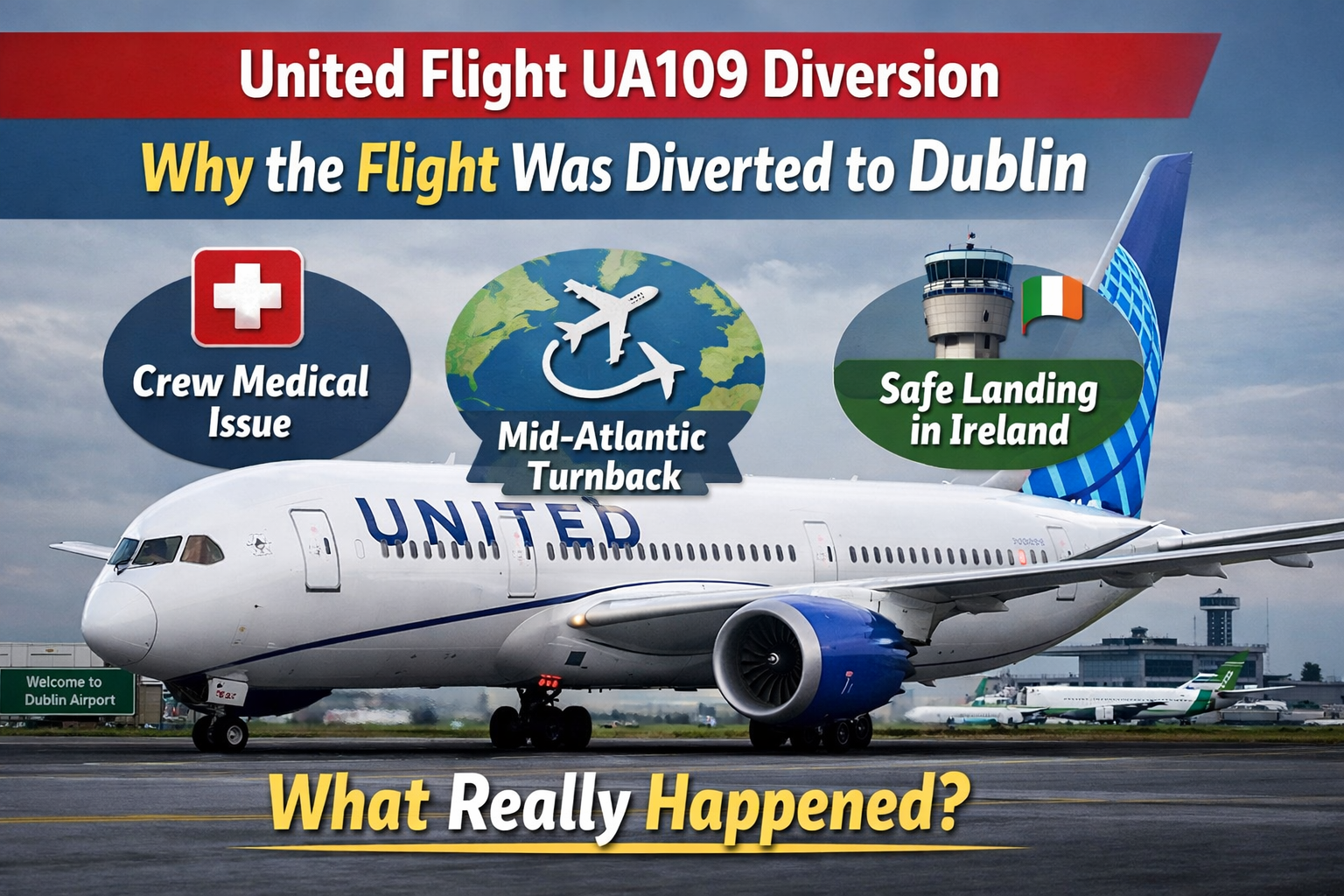
One example is United Airlines Flight UA109, which was flying from Europe to the United States but had to change its plan and land in Dublin. Many people were confused and worried about what happened. This article explains the UA109 diversion in simple words, using lists and tables to make it easy to understand.
1. Basic Information About the Flight
Here is a simple overview of the flight:
Table 1: Flight Details
| Item | Information |
|---|---|
| Airline | United Airlines |
| Flight Number | UA109 |
| Planned Route | Munich (Germany) → Washington Dulles (USA) |
| Flight Type | Long international flight |
| Diversion Airport | Dublin (Ireland) |
| Main Reason | Crew medical problem |
This flight was supposed to go straight from Germany to the United States. Instead, it stopped in Ireland.
2. Why the Flight Was Diverted
The flight did not divert because of a problem with the plane. The main reason was a health problem with a crew member.
What does this mean?
-
One member of the cabin crew became unwell.
-
That crew member could not continue working safely.
-
Airlines must have a minimum number of healthy crew members on board.
-
Without enough fit crew, the flight cannot legally continue.
Why crew health is important
Cabin crew do more than serve food and drinks. They are trained to:
-
Help in emergencies
-
Keep passengers calm
-
Handle medical problems
-
Lead people during evacuations
If one crew member cannot work, the safety of the whole flight can be affected.
3. Why the Plane Could Not Just Continue
Some people ask:
“Why not just continue flying with one less crew member?”
The reason is simple: safety rules.
Table 2: Why Enough Crew Members Are Needed
| Reason | Why It Is Important |
|---|---|
| Emergency exits | Crew must be at each exit |
| Medical help | Crew give first help to sick people |
| Safety rules | Airlines must follow the law |
| Long flight time | Crew cannot be overworked |
| Passenger safety | Everyone must be protected |
If the plane does not have enough healthy crew, it is not safe to continue a long flight over the ocean.
4. Why the Plane Landed in Dublin
When a plane flying over the ocean needs to land, it cannot just land anywhere. The airport must be ready to help.
Dublin was chosen because:
-
It is close to the flight route
-
It can handle large international planes
-
It has medical services
-
It has staff and equipment to help passengers and crew
Table 3: Why Dublin Was a Good Choice
| Reason | Explanation |
|---|---|
| Location | Near common ocean flight paths |
| Large airport | Can handle big planes |
| Medical help | Good hospitals and emergency care |
| Airline support | Used often for emergency landings |
| Passenger support | Can manage unexpected arrivals |
Landing in Dublin helped the airline take care of the crew member and passengers.
5. What Happened After Landing
After the plane landed in Dublin, several things had to be done.
Steps after the diversion:
-
The sick crew member received medical care
-
The airline worked with airport staff
-
Passengers were told about the delay
-
Plans were made to continue the journey
What passengers may experience:
-
Waiting in the plane or airport
-
Delays in travel
-
Missing connecting flights
-
Being rebooked on other flights
Table 4: Passenger Impact and Airline Help
| Passenger Experience | What the Airline Does |
|---|---|
| Long waiting time | Gives updates and information |
| Missed connections | Helps book new flights |
| Stress or worry | Offers support and guidance |
| Unexpected stop | Manages entry and airport process |
This situation is not comfortable for passengers, but it is done to keep everyone safe.
6. Common Myths About Flight Diversions
There are many wrong ideas about flight diversions. Let’s clear some of them.
Myth 1: The plane was broken
Truth: The plane was working fine.
Myth 2: The problem was small and did not need a diversion
Truth: Even small health problems with crew can affect safety.
Myth 3: Airlines divert flights easily
Truth: Diversions are expensive and difficult. Airlines avoid them unless needed.
7. Why Diversions Cost Airlines a Lot of Money
Changing the plan of a flight is costly for airlines.
Some of the costs include:
-
Extra fuel
-
Airport landing fees
-
Paying staff for extra time
-
Hotel or food for passengers
-
Delays to other flights
Table 5: Costs of a Flight Diversion
| Type of Cost | Example |
|---|---|
| Fuel | More fuel for landing and waiting |
| Airport fees | Cost to land and park the plane |
| Crew costs | Extra work hours or new crew |
| Passenger care | Rebooking and support |
| Schedule impact | Other flights may be delayed |
Even with these costs, airlines choose safety first.
8. What Passengers Can Learn
The UA109 diversion teaches some simple lessons:
-
Safety is always more important than speed
-
Not all problems are about the plane
-
Crew health is part of flight safety
-
Delays are sometimes needed to protect people
Tips for travelers:
-
Leave extra time for connecting flights
-
Use airline apps for updates
-
Stay calm if plans change
-
Remember that safety comes first
9. Why This Story Got Attention
Many people talked about UA109 because:
-
The plane turned back over the ocean
-
People saw the route change on flight tracking apps
-
There were many rumors online
This shows how fast news spreads today. But it also shows why it is important to understand the real reasons behind such events.
Conclusion: Safety Comes First
United Flight UA109 did not divert because of fear or panic. It diverted because a crew member became unwell, and the flight could not continue safely without meeting safety rules. The airline chose to land in Dublin to take care of the crew and protect passengers.
While diversions are inconvenient, they are part of how airlines keep people safe. The UA109 case reminds us that flying is not just about planes and routes—it is also about people, health, and safety. When plans change in the air, it is usually because the airline is doing the right thing to protect everyone on board.