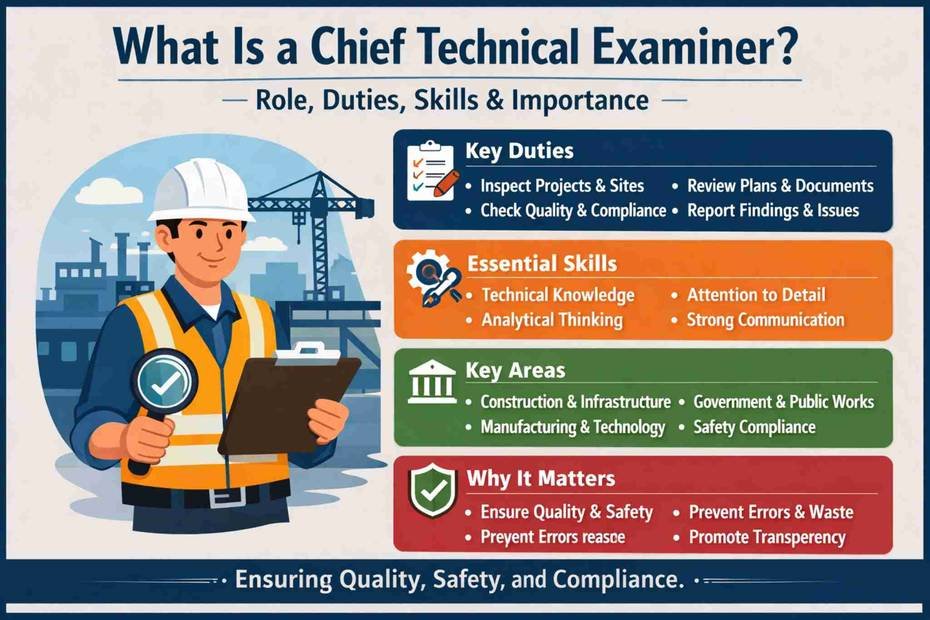
In many organizations, projects and technical work must follow rules, standards, and safety requirements. This can include building roads and bridges, making products in factories, or developing technology systems. If technical work is done poorly, it can cause accidents, waste money, and create legal problems. To avoid these issues, many organizations appoint a Chief Technical Examiner (CTE).
A Chief Technical Examiner is a senior technical professional who checks and reviews technical work done by others. The CTE does not usually carry out the work themselves. Instead, they examine designs, documents, processes, and results to make sure everything is done correctly, safely, and according to rules. The main purpose of this role is to protect quality, safety, and fairness in technical work.
1. Purpose of a Chief Technical Examiner
The Chief Technical Examiner exists to make sure technical work is correct and follows standards. The role helps organizations avoid mistakes, reduce risks, and improve how work is done.
Main Purposes (List)
-
Make sure work follows technical standards and rules
-
Check the quality of designs, materials, and processes
-
Help prevent safety problems and accidents
-
Reduce waste of time and money
-
Support fair and honest working practices
-
Improve systems and methods for future work
Purpose Explained (Table)
| Purpose | Simple Explanation |
|---|---|
| Compliance | Making sure rules and standards are followed |
| Quality | Checking that work meets required quality |
| Safety | Reducing risks to people and property |
| Cost Control | Avoiding waste and extra costs |
| Transparency | Making processes clear and fair |
| Improvement | Helping the organization work better in the future |
2. Where the Role Is Used
The Chief Technical Examiner role is used in many fields. The exact duties may change, but the main goal is always to check technical work and ensure quality and compliance.
Common Areas (List)
-
Public sector and government projects
-
Construction and building works
-
Factories and manufacturing plants
-
Technology and software projects
-
Regulated industries such as energy, transport, and utilities
Use by Sector (Table)
| Sector | How the Chief Technical Examiner Helps |
|---|---|
| Public Sector | Checks public works and use of funds |
| Construction | Reviews drawings, materials, and site work |
| Manufacturing | Checks production quality and processes |
| Technology | Reviews systems, software, and designs |
| Regulated Industries | Makes sure safety and legal rules are followed |
3. Main Duties of a Chief Technical Examiner
The Chief Technical Examiner works in stages, from planning the review to checking if changes have been made.
3.1 Planning the Review (List)
-
Choose projects or work to be examined
-
Decide what will be checked
-
Select the rules and standards to follow
-
Prepare simple checklists and plans
3.2 Checking Technical Work (List)
-
Review drawings, designs, and technical documents
-
Check if work follows standards and codes
-
Visit sites or review physical work when needed
-
Check materials, measurements, and test results
-
Review changes made to the original plan
3.3 Reporting and Follow-Up (List)
-
Write clear reports on what was found
-
Point out problems and weak areas
-
Suggest ways to fix issues
-
Check later if the problems were corrected
Read also: Spaietacle
Duties by Stage (Table)
| Stage | Main Activities |
|---|---|
| Planning | Decide what to check and how |
| Checking | Review documents and inspect work |
| Analysis | Find problems and risks |
| Reporting | Write findings and suggestions |
| Follow-Up | Check if fixes were done |
4. Skills Needed for a Chief Technical Examiner
To do the job well, a Chief Technical Examiner needs both technical knowledge and good personal skills.
Important Skills (List)
-
Good technical and engineering knowledge
-
Understanding of rules, standards, and codes
-
Ability to analyze information and spot problems
-
Clear writing and reporting skills
-
Good communication with teams and managers
-
Honest and fair attitude
Skills and Their Use (Table)
| Skill | Why It Is Important |
|---|---|
| Technical Knowledge | Helps check if work is done correctly |
| Knowledge of Rules | Makes sure standards are followed |
| Analysis | Helps find causes of problems |
| Communication | Makes reports easy to understand |
| Integrity | Builds trust in the examination process |
5. Tools and Methods Used
Chief Technical Examiners use simple and practical tools to do their work properly.
Common Tools (List)
-
Checklists to guide reviews
-
Document review forms
-
Simple data sheets or spreadsheets
-
Records of evidence and findings
-
Technical manuals and standards
Tools and Purpose (Table)
| Tool | How It Helps |
|---|---|
| Checklists | Make sure nothing important is missed |
| Review Forms | Record what was checked |
| Spreadsheets | Track issues and actions |
| Evidence Records | Support findings with proof |
| Standards | Provide clear rules to follow |
6. Challenges and Ethics
The work of a Chief Technical Examiner can be difficult at times. The CTE may face pressure or lack of proper information.
Common Challenges (List)
-
Resistance from people whose work is being checked
-
Missing or poor-quality documents
-
Limited time to complete reviews
-
Complex technical systems
-
Keeping up with changing standards
Ethical Points (Table)
| Ethical Point | Simple Meaning |
|---|---|
| Independence | Staying neutral and fair |
| Confidentiality | Keeping sensitive information safe |
| Honesty | Reporting findings truthfully |
| Fairness | Treating all cases equally |
7. Benefits of the Chief Technical Examiner Role
When the Chief Technical Examiner role is used well, organizations gain many benefits.
Main Benefits (List)
-
Better quality of work
-
Fewer mistakes and accidents
-
Lower costs due to less rework
-
Stronger compliance with rules
-
More trust from stakeholders and the public
Benefits Summary (Table)
| Area | Benefit |
|---|---|
| Quality | Higher standards of work |
| Safety | Fewer risks and incidents |
| Cost | Less waste and extra spending |
| Compliance | Fewer legal and rule violations |
| Trust | Better confidence in the organization |
Conclusion
The Chief Technical Examiner plays an important role in helping organizations deliver safe, high-quality, and compliant technical work. By checking designs, processes, and results, the CTE helps find problems early and improve how work is done. The role supports fairness, transparency, and better use of resources. As projects and technologies become more complex, the need for strong technical examination will continue to grow. Organizations that support this role are better prepared to manage risks, protect safety, and achieve long-term success.