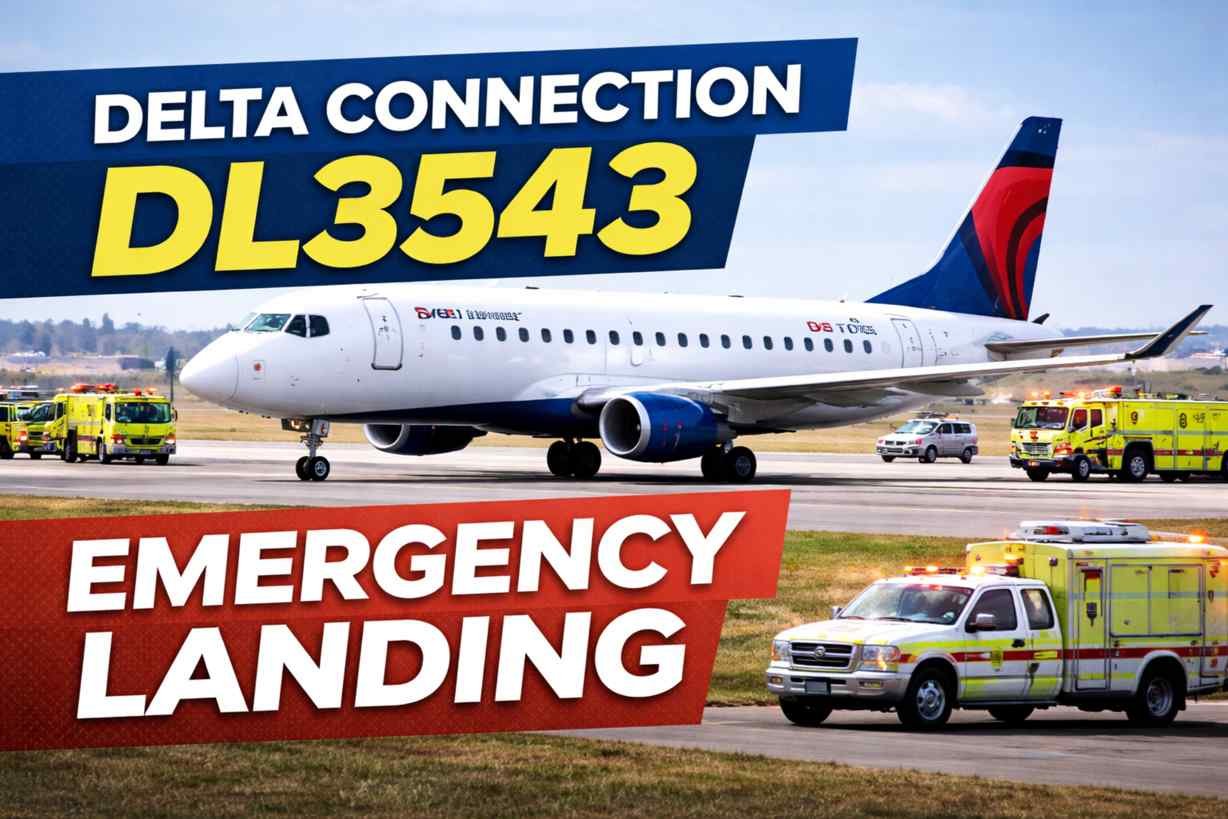
When people hear that a plane made an “emergency landing,” it can sound scary. Many travelers think this means the plane was about to crash. In most cases, this is not true. An emergency landing often means the pilots noticed a problem and chose the safest option: returning to the airport instead of continuing the trip.
The Delta Connection DL3543 emergency landing is a good example of this. Shortly after takeoff, the crew noticed a warning or technical issue. They declared an emergency and returned to the airport safely. No one was hurt. This article explains what happened, why the pilots made that choice, and what we can learn from it, using simple words and clear examples.
1. Quick Summary of the Incident
| Item | Simple Explanation |
|---|---|
| Flight | Delta Connection DL3543 |
| When | Shortly after takeoff |
| What happened | A system showed a warning |
| Action taken | Emergency declared, plane returned |
| Landing | Safe landing at the same airport |
| Injuries | None reported |
This table shows the main facts. The most important part is that the plane landed safely and passengers were not hurt.
2. What Happened During the Flight?
The problem happened soon after the plane took off. This time is called the climb phase. During this part of the flight, pilots check many instruments and systems.
What the pilots noticed:
-
A warning or unusual sign on the plane’s system
-
Something that did not look normal
-
A possible technical or pressure-related issue
What the pilots did:
-
Checked their flight rules and safety steps
-
Talked to air traffic control
-
Decided not to continue the trip
-
Turned the plane back to the airport
This shows that pilots do not take risks. If something looks wrong, they choose the safest path.
3. What Does “Emergency Landing” Really Mean?
The word “emergency” sounds very serious. But in flying, it does not always mean danger.
Why pilots declare an emergency:
-
To get fast help from air traffic control
-
To land quickly without delay
-
To make sure fire and medical teams are ready
-
To focus on safety instead of the schedule
What an emergency does NOT mean:
-
❌ The plane is falling
-
❌ The pilots lost control
-
❌ Passengers are in immediate danger
An emergency call is a safety tool. It helps the pilots get support and land safely.
Read also: United Flight UA109 Diversion
4. Why Planes Return Even for Small Problems
Some reports say the issue may be related to cabin pressure or another system warning. Planes have many sensors. Even small problems can cause warnings.
Common reasons planes return early:
-
Warning lights in the cockpit
-
Pressure system alerts
-
Unusual sounds or readings
-
A system not working as expected
Why it is safer to return:
-
The airport is nearby
-
Mechanics are available
-
Emergency teams are ready
-
The problem can be checked on the ground
| Reason to Return | Why It Is Safe |
|---|---|
| Early warning | Fix the problem before it gets worse |
| Close to airport | Faster and easier to land |
| Full support | Help is ready on the ground |
| Passenger safety | Less risk for everyone |
Returning early is a smart and careful choice.
5. What Happens After the Plane Lands?
After the plane lands, the work is not over. Many safety steps happen behind the scenes.
What usually happens next:
-
Plane inspection
-
Mechanics check the plane
-
They look at the system that gave the warning
-
-
Pilot reports
-
Pilots write what they saw and did
-
This helps improve safety in the future
-
-
Passengers get help
-
The airline rebooks flights
-
Sometimes hotels or meals are offered
-
-
Safety review
-
The airline checks if rules were followed
-
Any needed changes are made
-
| Step | Purpose |
|---|---|
| Inspection | Make sure the plane is safe |
| Reports | Learn from the event |
| Rebooking | Help passengers continue their trip |
| Review | Improve future safety |
6. Why Different Websites Say Different Things
You may see different details online about the same flight. This can be confusing.
Reasons for different reports:
-
Some sites post early news without full facts
-
Flight numbers can be reused on different routes
-
Some websites copy mistakes from others
-
Not all sources check official information
What information is most reliable:
-
The plane returned shortly after takeoff
-
The landing was safe
-
No injuries were reported
-
The action was taken for safety
Focus on these main points. Small details may change, but the safety outcome is clear.
7. How Passengers May Feel
Being on a plane that returns after takeoff can feel stressful.
Common feelings:
-
Fear
-
Confusion
-
Worry about flying again
These feelings are normal. But it helps to know that the pilots made the safest choice.
Helpful facts for passengers:
-
Planes are built with backup systems
-
Pilots train for problems many times
-
Returning early is safer than continuing
-
Most emergency landings end safely
Understanding this can help people feel calmer about flying.
8. What This Shows About Flight Safety
This event shows that air travel safety works well.
Key safety features shown in this event:
-
Early warning systems – The plane warned the pilots
-
Pilot training – The crew knew what to do
-
Clear rules – Step-by-step safety actions
-
Support teams – Help on the ground
| Safety Part | How It Helped |
|---|---|
| Warning systems | Noticed the problem early |
| Pilot training | Calm and safe response |
| Air traffic control | Gave priority to land |
| Ground teams | Ready in case of need |
9. Main Lessons for Travelers
Here are simple lessons people can take from this event:
For passengers:
-
Emergency landings are often done just to be safe
-
Returning to the airport is usually the best choice
-
Delays are better than taking risks
For the public:
-
Not all “emergencies” are dangerous situations
-
Safety systems are designed to catch problems early
-
A safe landing means the system worked as planned
10. Conclusion
The Delta Connection DL3543 emergency landing may sound scary, but it shows how flight safety works in real life. The pilots noticed a warning soon after takeoff. They did not ignore it. Instead, they declared an emergency and returned to the airport. The plane landed safely, and no one was hurt.
This kind of event is not a sign that flying is unsafe. It is a sign that the safety system is strong. Warnings, training, and clear rules help pilots make good decisions. For passengers, the most important thing to remember is this: when something does not look right in the air, the safest place to deal with it is on the ground.