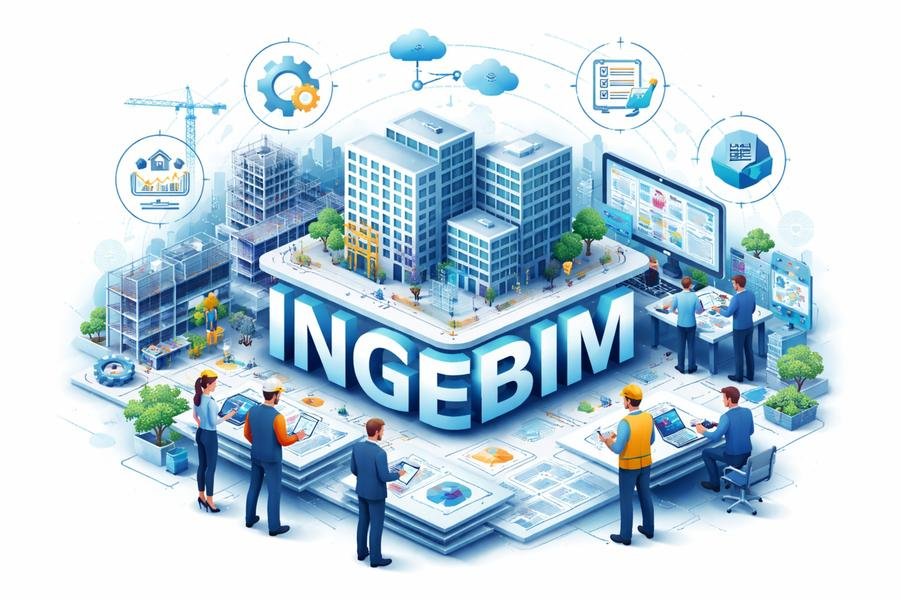
Ingebim is a term used to describe a modern way of working with engineering and Building Information Modeling (BIM). In simple words, Ingebim means connecting people, models, and data so that projects are planned, built, and managed in a smarter way.
Instead of using BIM only to draw 3D models, Ingebim uses BIM as a central system to support:
-
Better teamwork
-
Clear data sharing
-
Smarter decisions
-
Long-term use of project data
Ingebim helps teams work together from the start of a project until the building or asset is in use.
2. Why Ingebim Is Important
Many projects face common problems, such as:
-
Teams working in separate ways
-
Design mistakes found too late
-
Changes that cost time and money
-
Poor handover of information after construction
Ingebim helps reduce these problems by making sure:
-
Everyone works with the same data
-
Problems are found early
-
Information is not lost between project stages
Main reasons Ingebim is needed:
-
Projects are becoming more complex
-
Teams are larger and more spread out
-
Clients want better control of cost and time
-
Owners want useful data after handover
Read also:Bardid
3. Core Ideas of Ingebim
Ingebim is built on a few simple ideas:
Main Ideas
-
Integration – connect tools, teams, and data
-
One source of truth – one main place for project data
-
Whole life view – think about design, build, and use
-
Teamwork – work together from the start
-
Data-based decisions – use data to guide choices
Table 1: Core Ideas of Ingebim
| Core Idea | Simple Meaning | Why It Helps |
|---|---|---|
| Integration | Connect all systems and teams | Less confusion |
| One source of truth | One main data platform | No version problems |
| Whole life view | Think about the full life of the project | Better long-term value |
| Teamwork | Teams work together early | Fewer mistakes |
| Data-based work | Use data to decide | Better results |
4. Main Features of Ingebim
Ingebim uses digital tools and processes to support projects.
Key Features
-
3D models of buildings and assets
-
Time planning linked to models (4D)
-
Cost planning linked to models (5D)
-
Clash detection (finding design problems early)
-
Shared data platform
-
Simple dashboards and reports
Table 2: Features and Benefits
| Feature | What It Does | Benefit |
|---|---|---|
| 3D modeling | Shows the design in 3D | Easier to understand designs |
| 4D planning | Links model with time | Better project planning |
| 5D planning | Links model with cost | Better cost control |
| Clash detection | Finds design problems early | Less rework |
| Shared data space | One place for all files and models | Clear and updated information |
| Dashboards | Shows key project data | Better project control |
5. Benefits of Ingebim
Ingebim brings many benefits to projects and teams.
Main Benefits
-
Better teamwork between designers, engineers, and builders
-
Fewer mistakes in design and construction
-
Better control of time and cost
-
Clearer communication
-
Better quality buildings and assets
-
Useful data for owners after handover
Table 3: Benefits for Different Users
| User Group | How Ingebim Helps Them |
|---|---|
| Engineers | Clearer coordination with other teams |
| Project managers | Better planning and progress tracking |
| Contractors | Fewer site problems and changes |
| Owners | Better data for operation and maintenance |
| Public clients | More open and clear project control |
6. Where Ingebim Is Used (Use Cases)
Ingebim can be used in many types of projects.
Common Use Cases
-
Roads, bridges, and rail projects
-
Office and housing buildings
-
Factories and power plants
-
City planning and smart cities
-
Facility and asset management
Table 4: Use Cases and Value
| Project Type | How Ingebim Adds Value |
|---|---|
| Infrastructure | Better planning and long-term upkeep |
| Buildings | Better design quality and fewer errors |
| Industrial sites | Better control of complex systems |
| Smart cities | Better planning with digital models |
| Asset management | Better maintenance planning |
7. How to Start Using Ingebim
Using Ingebim is not only about buying software. It also needs planning and teamwork.
Steps to Start
-
Set clear goals for using Ingebim
-
Choose tools that work well together
-
Create simple rules and standards
-
Train your team
-
Start with a small pilot project
-
Improve and grow step by step
Table 5: Common Problems and Solutions
| Problem | What Can Go Wrong | Simple Solution |
|---|---|---|
| Lack of skills | Teams do not know the tools | Provide basic training |
| Tool mismatch | Software does not connect | Choose tools that support open data |
| High first cost | Budget concerns | Start small and grow |
| Resistance to change | People prefer old methods | Show clear benefits |
| Data safety concerns | Risk of data loss or misuse | Set clear access rules |
8. Ingebim vs Traditional BIM
BIM is mainly about creating and using 3D models. Ingebim goes further by connecting BIM with engineering data and project processes.
Table 6: Ingebim vs BIM
| Aspect | Traditional BIM | Ingebim |
|---|---|---|
| Main focus | 3D models | Full project data and teamwork |
| Use of data | Mainly design and build | Design, build, and use stages |
| Teamwork | Often separate teams | Fully connected teams |
| Decision use | Limited data use | Data used for better decisions |
| Long-term use | Limited after handover | Strong focus on operations |
9. Challenges of Ingebim
Ingebim also has some challenges.
Main Challenges
-
Not enough digital skills in teams
-
Tools may not work well together
-
High starting cost
-
Change is hard for people
-
Data safety and access control
These challenges can be managed with:
-
Training
-
Clear planning
-
Strong leadership support
-
Simple rules and processes
10. The Future of Ingebim
Ingebim will continue to grow as digital tools improve.
Future Trends
-
More use of AI for design and planning
-
Better digital twins for real-time monitoring
-
More focus on green and sustainable design
-
More automation in design and reporting
-
Better links between software tools
11. Who Should Use Ingebim?
Ingebim is useful for:
-
Engineers and designers
-
Construction managers
-
Project owners and operators
-
Government and public agencies
-
Companies working on large projects
12. Conclusion
Ingebim is a simple idea with strong impact: connect people, models, and data so projects work better. It helps teams reduce mistakes, save time and cost, and create better buildings and infrastructure.
As projects become more complex and digital, Ingebim offers a clear way forward. Companies that start using Ingebim early will be better prepared for the future of construction and engineering.