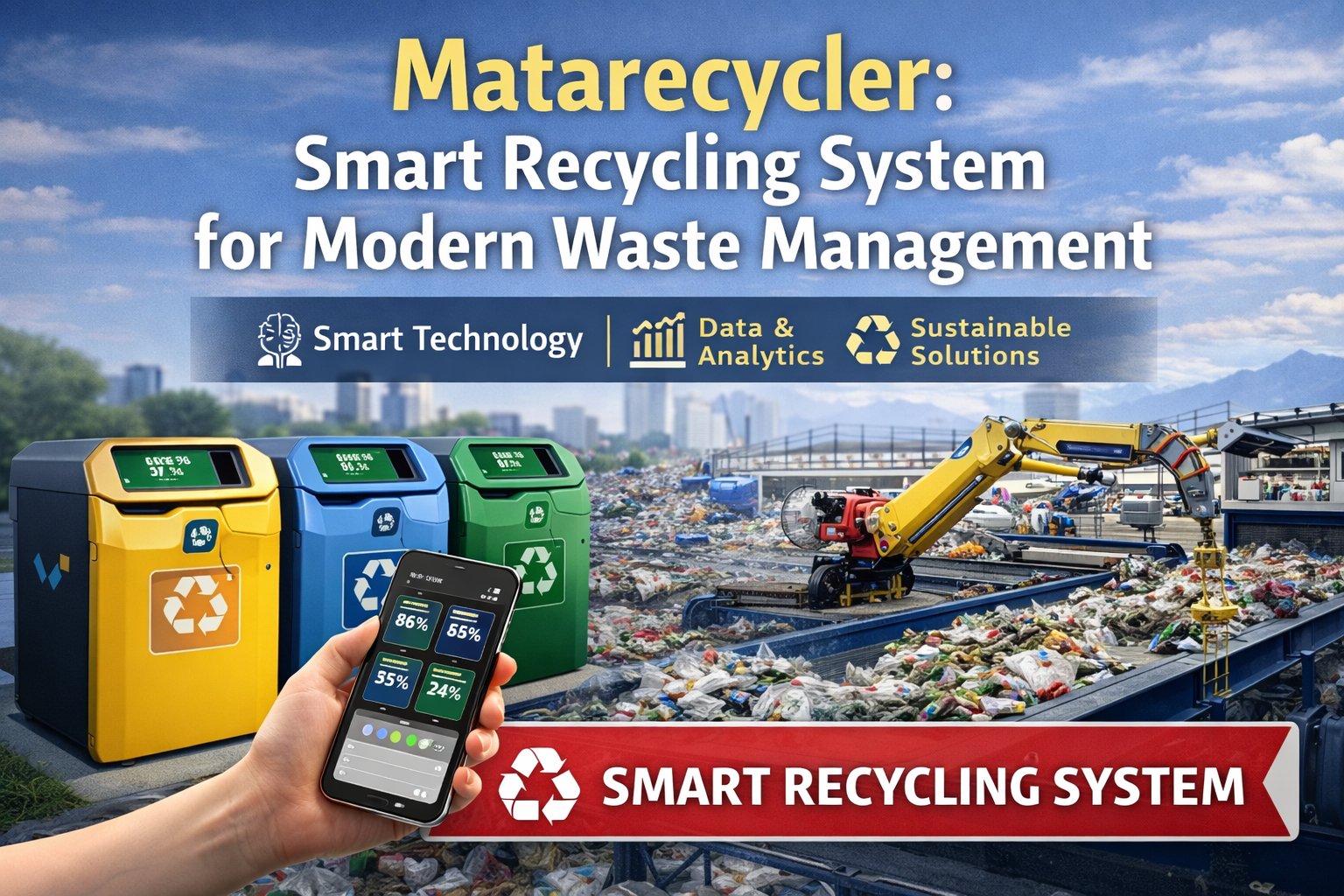
Waste is increasing all over the world. Cities are growing, consumption is rising, and landfills are filling up faster than expected. Traditional recycling systems struggle with poor sorting, low participation, high costs, and lack of transparency. Many recyclable materials still end up in landfills or oceans, matarecycler is a concept often used to describe a modern approach to recycling and waste management. In different sources, Matarecycler is described as a digital platform, a smart waste system, a recycling marketplace, or an automated recycling solution. While the exact form may vary, the main idea is the same: use technology, data, and better systems to improve how waste is collected, sorted, traded, and reused.
This article explains Matarecycler in simple terms. It covers what Matarecycler is, how it works, its key features, benefits, challenges, and how it supports a more sustainable future Labarty
What Is Matarecycler
Matarecycler is a term used to describe a modern recycling solution. It does not refer to one single product with a fixed design. Instead, it represents a group of ideas and systems focused on making recycling more effective and efficient.
In many explanations, Matarecycler is presented as:
-
A digital platform that connects waste producers with recyclers and buyers
-
A smart waste management system that uses sensors and data
-
An automated recycling process using machines, robotics, and AI
-
A marketplace for recyclable materials
Core Purpose of Matarecycler
The main goals of Matarecycler are:
-
Reduce waste going to landfills
-
Improve recycling rates
-
Increase reuse of materials
-
Make waste management more efficient
-
Support the circular economy
Simple Definition
In simple words, Matarecycler means using modern tools and systems to make recycling smarter, faster, and more valuable for both people and businesses.
Why Recycling Needs Modern Solutions
Traditional recycling systems face many problems. These problems reduce the effectiveness of recycling and increase environmental damage.
Common Problems in Traditional Recycling
-
Poor sorting of waste
-
Contamination of recyclable materials
-
Low public participation
-
High collection and transport costs
-
Limited transparency on where waste goes
Environmental Impact of Poor Recycling
When recycling systems fail:
-
More waste goes to landfills
-
Plastic and waste reach oceans
-
Natural resources are wasted
-
Pollution increases
-
Climate change impact grows
The Role of Technology in Recycling
Technology helps solve these problems by:
-
Tracking waste in real time
-
Automating sorting processes
-
Improving collection routes
-
Connecting waste sellers and buyers
-
Providing data for better decisions
Matarecycler represents this technology-driven approach.
Key Features of Matarecycler
Matarecycler systems often include a mix of digital tools, smart devices, and physical infrastructure. The exact features may differ, but many share common elements.
Digital Platform and Marketplace
A core feature of many Matarecycler models is a digital platform that connects different stakeholders.
These stakeholders include:
-
Households
-
Businesses
-
Waste collectors
-
Recycling centers
-
Buyers of recycled materials
The platform may allow users to:
-
List recyclable materials
-
Find buyers or recyclers
-
Track waste quantities
-
Monitor recycling performance
Smart Collection and Sensors
Smart waste collection improves efficiency and reduces costs.
Key tools include:
-
Smart bins with fill-level sensors
-
GPS tracking for collection vehicles
-
Real-time alerts when bins are full
These tools help schedule pickups only when needed, saving fuel and time.
Automated Sorting and Processing
Many Matarecycler systems use automation to improve sorting.
Common technologies:
-
Optical sensors to identify materials
-
Robotics for sorting waste
-
AI systems to recognize plastics, metals, and paper
-
Shredders and separators for material recovery
Automation reduces human error and increases recycling quality.
Data Analytics and Reporting
Data is central to Matarecycler.
Analytics tools can:
-
Measure recycling rates
-
Identify waste patterns
-
Optimize routes and schedules
-
Report environmental impact
Core Features
| Feature Area | Description |
|---|---|
| Digital Platform | Connects waste producers, recyclers, and buyers |
| Smart Collection | Sensors and tracking for efficient pickups |
| Automation | Sorting and processing using machines and AI |
| Analytics | Data dashboards and performance reports |
| Marketplace | Trading of recyclable materials |
How Matarecycler Works Step by Step
While implementations vary, the basic working process of Matarecycler follows a clear flow.
Waste Collection
Waste is placed in bins at homes, offices, or public spaces. Smart bins can detect how full they are.
Steps include:
-
Waste deposited by users
-
Sensors detect fill levels
-
System sends pickup alerts
Sorting and Processing
Collected waste is sent to sorting facilities.
Processes may include:
-
Separation of materials (plastic, paper, metal, glass)
-
Automated sorting using sensors and AI
-
Cleaning and shredding of materials
Trading and Reuse
Recyclable materials are listed on a digital platform or sent to buyers.
This stage includes:
-
Matching sellers and buyers
-
Pricing recyclable materials
-
Transport to manufacturers
Reporting and Feedback
Users and managers can view reports.
Reports may show:
-
Amount of waste recycled
-
Environmental impact
-
Cost savings
-
Performance trends
Types of Matarecycler Models
Matarecycler is not one fixed model. It appears in different forms depending on the use case.
Marketplace-Based Models
These focus on trading recyclable materials.
Main features:
-
Listings of recyclable materials
-
Buyer and seller accounts
-
Pricing and transaction records
Smart Waste Management Systems
These focus on improving collection and operations.
Main features:
-
Smart bins and sensors
-
Route optimization
-
Real-time monitoring
Industrial Recycling Systems
These focus on large-scale sorting and processing.
Main features:
-
Automated sorting machines
-
Robotics and AI
-
High-volume processing
Comparison of Models
| Model Type | Main Focus | Best For |
|---|---|---|
| Marketplace | Trading materials | Businesses and recyclers |
| Smart Waste | Efficient collection | Cities and communities |
| Industrial Systems | Automated processing | Recycling plants |
Benefits of Matarecycler
Matarecycler provides many benefits across environmental, economic, and social areas.
Environmental Benefits
-
Reduced landfill waste
-
Higher recycling rates
-
Lower pollution
-
Better resource conservation
Economic Benefits
-
Lower collection and transport costs
-
New revenue from recycled materials
-
Job creation in recycling technology
-
More efficient operations for cities
Social and Community Benefits
-
Increased public participation
-
Better awareness of recycling
-
Cleaner neighborhoods
-
Community engagement programs
Business Benefits
Businesses benefit from Matarecycler through:
-
Reduced waste management costs
-
Better reporting for sustainability goals
-
Compliance with environmental regulations
-
Improved brand image
Matarecycler and the Circular Economy
The circular economy is an economic model that focuses on reuse, recycling, and resource efficiency.
Linear vs Circular Economy
| Linear Economy | Circular Economy |
|---|---|
| Take resources | Reuse resources |
| Make products | Extend product life |
| Dispose waste | Recycle materials |
Matarecycler supports the circular economy by:
-
Keeping materials in use
-
Reducing the need for new raw materials
-
Creating value from waste
Real-World Use Cases
Matarecycler-style systems can be used in many settings.
Urban Waste Management
Cities can use smart bins and analytics to:
-
Reduce overflow
-
Optimize collection routes
-
Lower fuel use
Business and Industrial Recycling
Factories and offices can:
-
Track waste output
-
Sell recyclable materials
-
Improve sustainability reporting
Community Recycling Programs
Communities can:
-
Use apps to track recycling
-
Earn rewards for participation
-
Learn about waste reduction
Challenges and Limitations
Despite its benefits, Matare cycler faces challenges.
Cost and Infrastructure
-
High initial setup cost
-
Need for sensors and machines
-
Maintenance expenses
Technology Barriers
-
Need for technical skills
-
Integration with existing systems
-
Data management challenges
Adoption Issues
-
Resistance to change
-
Low public awareness
-
Need for training
Data Privacy and Security
Digital platforms must protect:
-
Business data
-
User information
-
Operational details
Future of Matare cycler and Recycling Technology
The future of recycling will likely involve more technology and data.
Emerging Trends
-
Smarter AI for sorting
-
More advanced robotics
-
Better sensor technology
-
Integration with smart cities
Policy and Regulation
Governments are increasing:
-
Recycling targets
-
Environmental regulations
-
Support for sustainable technology
Long-Term Vision
In the future, Matare cycler-like systems may:
-
Make waste management almost fully automated
-
Increase global recycling rates
-
Reduce environmental damage significantly
Simple Comparison: Traditional Recycling vs Matare cycler
| Aspect | Traditional Recycling | Matare cycler Approach |
|---|---|---|
| Sorting | Manual and basic | Automated and AI-based |
| Collection | Fixed schedules | Smart, sensor-based |
| Data | Limited tracking | Real-time analytics |
| Efficiency | Lower | Higher |
| Transparency | Low | High |
Practical Steps for Adopting Matare cycler Systems
Organizations can adopt Matare cycler in stages.
Assess Current Waste System
-
Identify waste types
-
Measure current recycling rates
-
Find inefficiencies
Choose Suitable Tools
-
Smart bins
-
Digital platforms
-
Analytics software
Train Staff and Users
-
Provide basic training
-
Create simple guides
-
Encourage participation
Monitor and Improve
-
Track performance
-
Adjust processes
-
Improve over time
FAQs
Is Matare cycler a single company or product
Matare cycler is a concept used by different sources to describe modern recycling platforms or systems. It is not always one specific brand.
Can small communities use Matare cycler
Yes, small communities can use simplified versions such as smart bins, basic tracking apps, and small-scale marketplaces.
Does Matare cycler replace traditional recycling
Matare cycler improves traditional recycling by adding technology and better systems. It does not remove the need for basic recycling infrastructure.
Conclusion
Matare cycler represents a modern way of thinking about recycling and waste management. Instead of relying only on traditional methods, it brings technology, data, automation, and digital platforms into the recycling process. This helps reduce waste, improve efficiency, and support a circular economy, as waste continues to grow around the world, solutions like Matare cycler will become more important. While challenges such as cost and adoption remain, the long-term benefits for the environment, businesses, and communities are strong. With proper planning and support, Matare cycler-style systems can help build a cleaner and more sustainable future.