Today, many people and businesses use many different digital tools to get work done. There are tools for tasks, communication, data, reports, customers, and more. When these tools do not work well together, work becomes slow and confusing. Information gets lost, and teams waste time switching between systems.
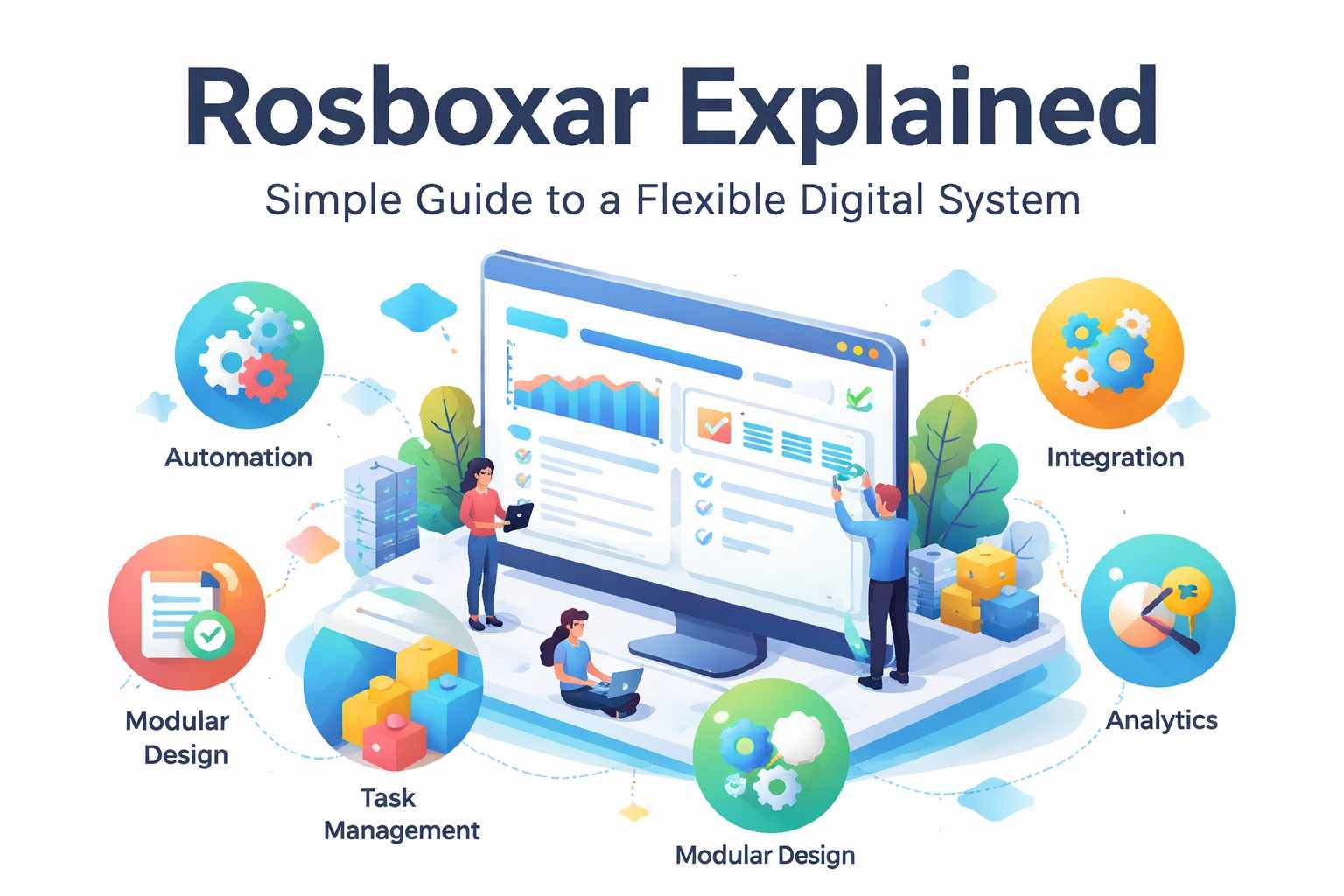
Rosboxar is a modern idea that tries to solve this problem. It is not one single product with one clear meaning. Instead, Rosboxar is best explained as a flexible and modular digital system or way of building digital workflows. Some people describe Rosboxar as software for business work. Others describe it as a general framework or method for organizing digital systems.
No matter how it is described, the main goal of Rosboxar is the same:
👉 to make digital work easier, more connected, and more flexible.
This article explains Rosboxar in simple words using lists and tables.
1. What Is Rosboxar?
Rosboxar is a way to design and organize digital systems so they are easy to change, easy to connect, and easy to grow.
Instead of using one big and rigid system, Rosboxar uses small parts (modules) that work together. These parts can be changed or replaced when needs change.
Main Ideas of Rosboxar
-
Systems are made from small parts
-
Parts can be changed easily
-
Tools can connect with each other
-
Repeated work can be automated
-
Systems can grow over time
-
People should find systems easy to use
2. How Rosboxar Is Structured
Many people describe Rosboxar as a layered system. This means it has different parts, and each part has a clear role.
Table 1: Basic Structure of Rosboxar
| Layer | What It Means | Why It Is Important |
|---|---|---|
| Task Modules | Small parts for tasks | Easy to change one part |
| Connection Layer | Links to other tools | Tools can share data |
| Automation Layer | Rules that run tasks | Saves time and effort |
| Data Layer | Stores and shows data | Helps people understand work |
| User Interface | Screens and dashboards | Easy for people to use |
This structure helps teams update one part of the system without breaking everything else.
3. Main Features of Rosboxar
Rosboxar systems usually include simple but powerful features.
Common Features (List)
-
Automatic workflows
-
Small parts that can be changed
-
Connection with other tools
-
Dashboards for viewing data
-
Simple setup options
-
User access control
-
Cloud-based systems
-
Basic reports and charts
Read also: Pasonet
Table 2: Features and Benefits
| Feature | Benefit |
|---|---|
| Automation | Less manual work |
| Modular design | Easy updates |
| Tool connections | All data in one place |
| Dashboards | Clear view of progress |
| Reports | Better decisions |
| User roles | Better control and safety |
4. Where Rosboxar Can Be Used
Rosboxar is flexible and can be used in many areas.
Common Uses
-
Business work
-
Customer management
-
Team projects
-
IT and cloud systems
-
Creative work (writing, design)
-
Data and reports
-
Innovation projects
Table 3: Use Cases
| Area | How Rosboxar Helps |
|---|---|
| Business | Manages tasks and reports |
| CRM | Tracks customer details |
| IT | Connects cloud systems |
| Creative teams | Organizes projects |
| Data work | Shows clear results |
| Innovation | Supports new ideas |
5. Benefits of Using Rosboxar
Using a Rosboxar-style system can bring many benefits.
Main Benefits (List)
-
Work is faster
-
Less confusion
-
Teams work better together
-
Systems are easier to grow
-
Information is clearer
-
Changes are easier to make
Table 4: Benefits and Results
| Benefit | Result |
|---|---|
| Faster work | More done in less time |
| Better links | Less tool switching |
| Teamwork | Better communication |
| Growth | System grows with needs |
| Clear data | Better planning |
| Flexibility | Easy changes |
6. Challenges and Limits
Rosboxar is helpful, but it is not perfect. There are some problems to watch out for.
Common Challenges
-
No single clear definition
-
Takes time to learn
-
Tool connections can be hard
-
Data safety must be managed
-
Too many features can confuse users
Table 5: Problems and Simple Solutions
| Problem | Simple Solution |
|---|---|
| Not clearly defined | Set clear goals |
| Hard to learn | Give basic training |
| Tool setup issues | Start small |
| Security risks | Use access rules |
| Too complex | Keep systems simple |
7. Rosboxar as a Way of Thinking
Rosboxar is not only about software. It is also a way of thinking about digital work.
This way of thinking includes:
-
Improve systems step by step
-
Listen to user feedback
-
Try small changes first
-
Work together as a team
-
Build systems that can change
Table 6: Tool vs. Way of Thinking
| View | Meaning |
|---|---|
| As a tool | A digital system |
| As a framework | A way to design workflows |
| As a mindset | A flexible way to work |
8. The Future of Rosboxar
The ideas behind Rosboxar match future digital trends.
Future Trends (List)
-
More use of automation
-
Smarter systems with AI
-
Easy-to-build digital tools
-
Better data safety rules
-
More personal workflows
Table 7: Future Trends and Impact
| Trend | Impact |
|---|---|
| Automation | Less manual work |
| AI tools | Smarter decisions |
| Easy builders | More people can use tech |
| Data safety | More trust |
| Personal systems | Better user experience |
9. Conclusion
Rosboxar is a simple but powerful idea for building modern digital systems. It focuses on small parts, easy changes, strong connections, and helpful automation. Even though people explain Rosboxar in different ways, the main goal stays the same:
👉 Make digital work simple, connected, and flexible.
By using Rosboxar-style systems, people and businesses can:
-
Work faster
-
Reduce confusion
-
Connect tools better
-
Grow systems over time
-
Adapt to change more easily
In a world where digital work keeps changing, Rosboxar offers a useful way to build systems that are ready for the future.